

Mentoring Scheme Award
Improving capabilities in low temperature measurement
Application code: MSA 25-01-10
Organisation 1: IMBiH, Bosnia and Herzegovina
Organisation 2: PTB, Germany
Expanding IMBiH’s Low-Temperature Calibration Capabilities through Collaboration with PTB
Overview:
Through the MSA project, the Institute of Metrology of Bosnia and Herzegovina (IMBiH) and the Physikalisch-Technische Bundesanstalt (PTB) successfully strengthened IMBiH’s capabilities in cryogenic thermometry, enabling IMBiH to realize the triple point of argon (−189.3442 °C) for the first time. This milestone has expanded the laboratory’s calibration capabilities, allowing it to perform high-accuracy temperature-sensor calibrations at cryogenic temperatures.
At the start of the project, IMBiH had no previous experience with realizing the Argon Triple Point. To address this, PTB provided hands-on technical training covering the installation, operation, and testing of the Argon Triple-Point Apparatus (ATPA). Since both IMBiH and PTB operate the same ATPA system, knowledge transfer was highly effective, allowing practical experience to be directly applied in the IMBiH laboratory.
A key factor in the success of the project was the structured exchange of expertise through two technical visits. The project began with a two-week training visit to PTB (March 2026), where two IMBiH experts received intensive hands-on training in the operation and maintenance of the ATPA system.
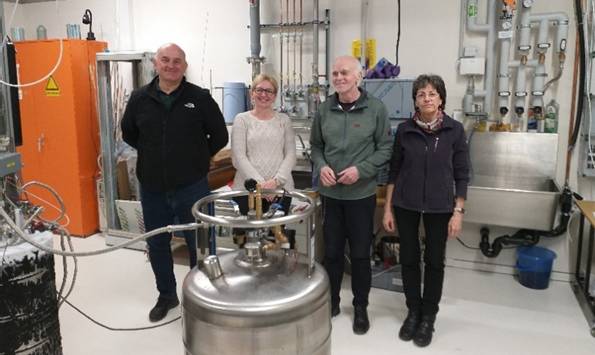
Figure 1. Joint work at PTB
During the visit to PTB, intensive practical work was carried out on the realization of the Argon Triple Point. Activities included demonstration and comparison of the original and upgraded Argon Triple Point systems at PTB, transfer of the argon cell to a new vacuum-insulated container, successful realization of seven Argon Triple Point plateaus, and active participation IMBiH experts in all stages of plateau preparation, pressure regulation, and SPRT calibration at −189.344 °C. Different pressure regulation concepts and the thermal performance of the upgraded insulation system were also experimentally evaluated to assess their impact on plateau stability. Throughout the visit, the PTB colleagues generously shared their extensive expertise and practical experience, providing invaluable support and significantly contributing to the successful transfer of knowledge and development of the lMBiH’s cryogenic thermometry capabilities.
Following the training at PTB, IMBiH installed the Argon Triple Point Apparatus (ATPA) at its laboratory, carrying out the assembly and system configuration. After the initial installation had been completed, an expert from PTB (May 2026) visited the laboratory to support the final setup, operational testing, and optimization of the system. This stepwise approach ensured effective knowledge transfer and enabled IMBiH to independently operate the ATPA with confidence.
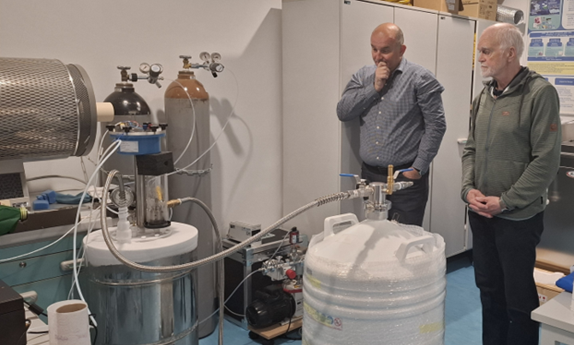
Figure 2. Visit and joint work at IMBiH
Following the successful installation of the ATPA system, the MSA project focused on optimizing system performance. Together, the partners identified and addressed key technical challenges, including pressure control, argon sample condensation, and thermal contact. Drawing on PTB’s experience, IMBiH was also able to implement improvements to the original ATPA design, further enhancing the system’s performance and few reliability.
Key Achievements:
As a result of the project, IMBiH staff acquired the expertise required to independently install, operate, and maintain the ATPA system, while following appropriate safety procedures. The successful installation of the apparatus extended IMBiH’s primary calibration capabilities from Triple Point of Mercury at –38.8344 °C to the Triple Point of Arrgon at –189.3442 °C, allowing the laboratory to offer calibrations from the Triple Point of Argon to the Freezing Point of Aluminium (660.323 °C).
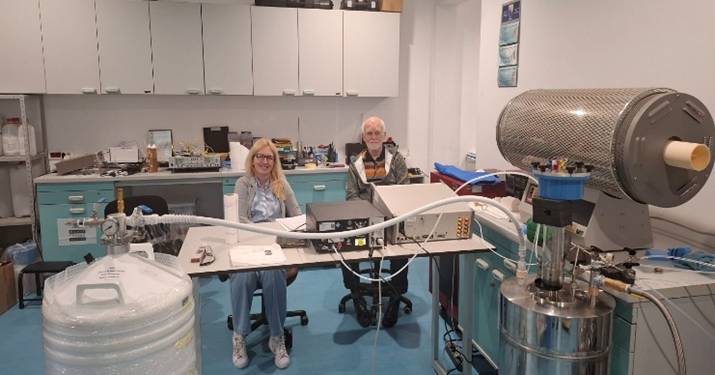
Figure 3. Installation of the ATPA system at IMBiH
As a further result, several proposals for further improvements to the IMBiH setup were developed. These proposals involve effort and costs, and they are not strictly necessary for routine operations. Depending on manpower and financing, they can be the basis for developments in future.
Beyond the technical achievements, the project strengthened the partnership between IMBiH and PTB through technical visits, joint measurements, and continuous knowledge exchange in both English and German. The collaboration established a strong foundation for future research activities and further development of cryogenic thermometry in Bosnia and Herzegovina.