

Mentoring Scheme Award
Exchange of knowledge and experience for the calibration of passive radon detectors
Application code: MSA-25-03-03
Organisation 1: Bureau of Metrology, Montenegro
Organisation 2: Federal Institute of Metrology METAS, Switzerland
Overview:
The partnership between the Bureau of Metrology of Montenegro and METAS has resulted in the enhancement of the capabilities of the Bureau’s Ionizing Radiation Laboratory in the field of verification and calibration of active and calibration of passive radon detectors. The objectives of the cooperation were achieved and included the exchange of knowledge and experience, gaining in-depth insight into radon verification and calibration systems, improvement of measurement procedures and statistical analysis of results, with particular emphasis on the evaluation of measurement uncertainty, as well as the establishment of procedures for the calibration of passive radon detectors. Furthermore, the cooperation involved practical laboratory work, knowledge transfer in the field of ionizing radiation protection, and preparation for future interlaboratory comparison.
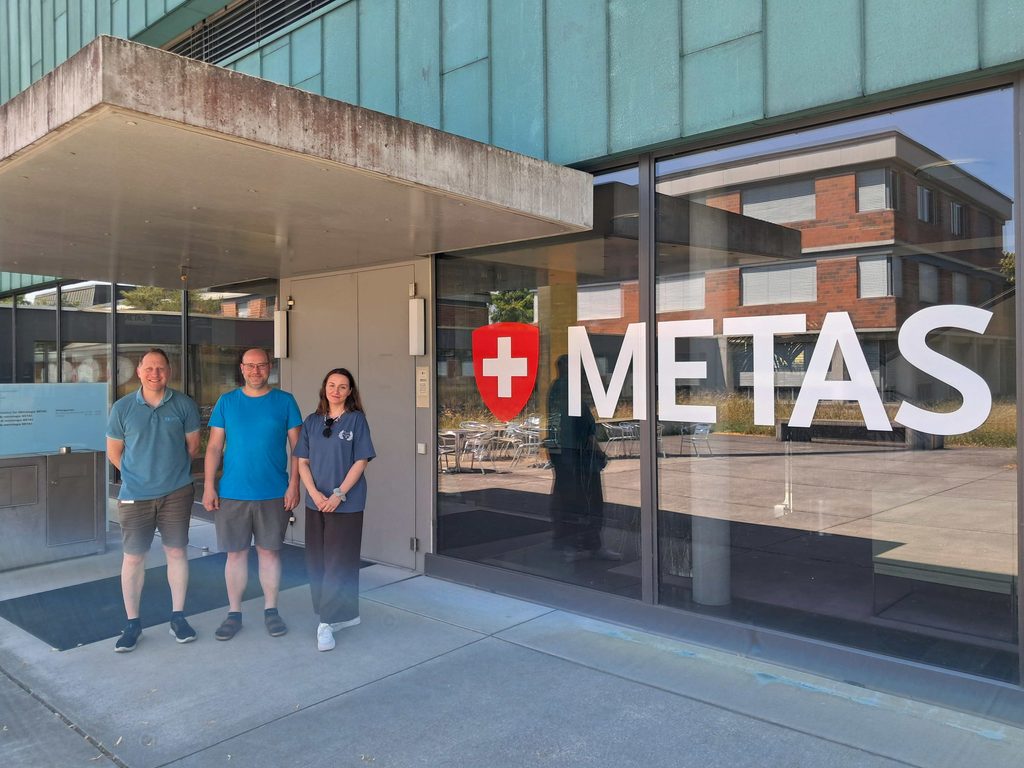
Practical Training: The verification and calibration procedure for the RAD7 instrument was jointly carried out at the Bureau of Metrology of Montenegro, while the verification and calibration of the AlphaGUARD, AlphaE and Radon Scout instruments was performed at METAS. Familiarization with new types of radon measuring instruments is of great importance to both parties, as it provides practical experience in working with different instruments and a better understanding of their specific characteristics during the verification and calibration process.
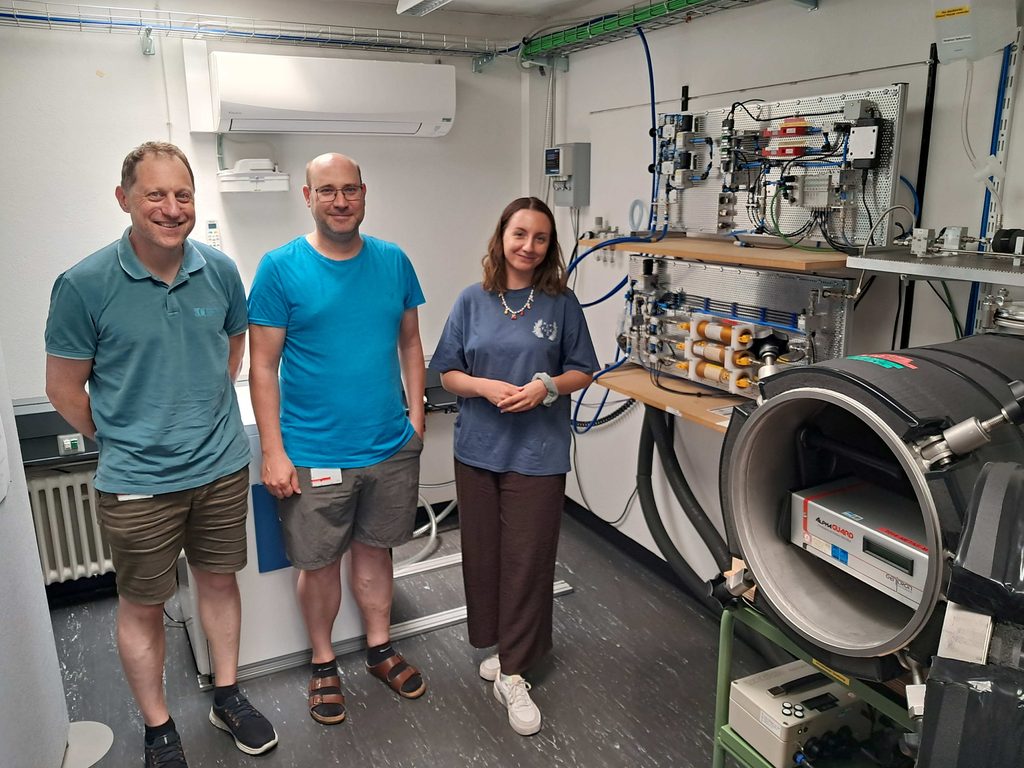
Development of New Tools: The main difference between the systems at METAS and the Bureau of Metrology of Montenegro is that METAS enables the radon concentration in the chamber to be maintained at a constant level, whereas an initial concentration in the Bureau’s chamber can be set, which is subject to radioactive decay and decreases exponentially. At METAS the reference is based on the flow-through method (primary standard), while at the Bureau of Metrology of Montenegro the reference is an active calibrated radon detector (secondary standard). Consequently, the approaches to processing the measurement results also differ. This issue was addressed by developing new Excel files adapted to the Bureau’s system, thereby improving the statistical processing of data, particularly with regard to the calculation of measurement uncertainty.
Development of New Methods: A procedure for the calibration of passive CR-39 radon detectors was developed for the Bureau of Metrology of Montenegro, including the processing of exposure data and the number of alpha tracks, as well as the determination of the calibration factor. A dedicated Excel file was developed for statistical processing, specifically adapted to the working methods and specific characteristics of the Bureau of Metrology of Montenegro laboratory.
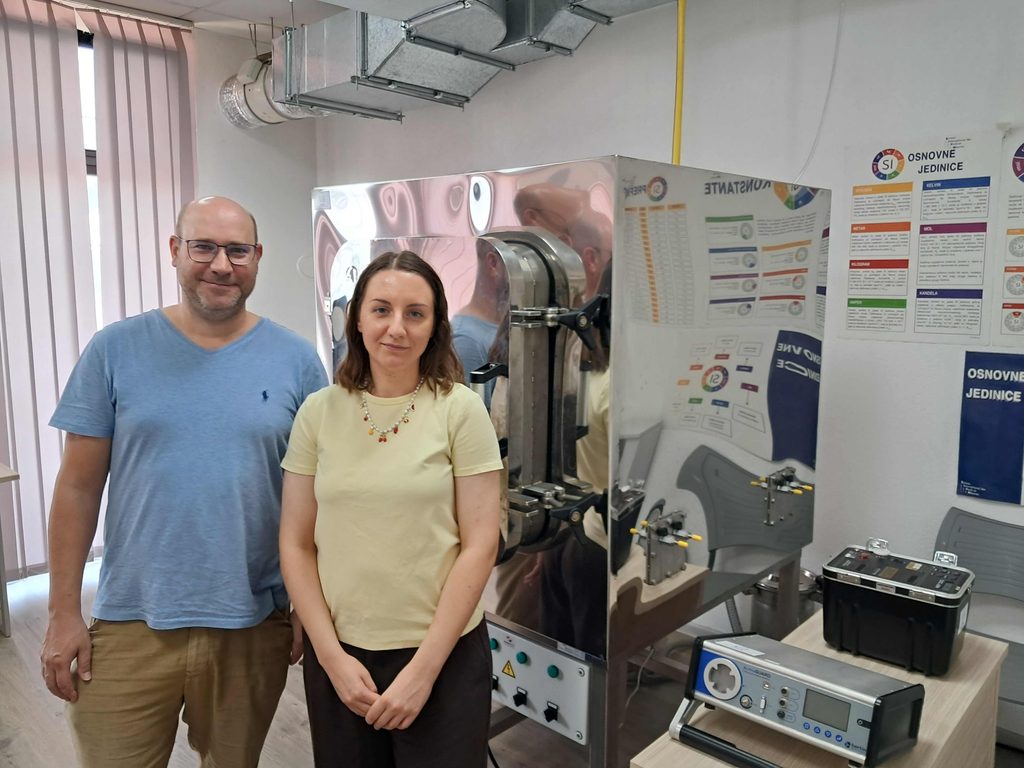
Future Cooperation: A plan was prepared for the implementation of an interlaboratory comparison for the Bureau’s reference radon detector to be carried out at METAS.
Impact
The procedure developed for the calibration of passive detectors will serve as the basis for establishing an official Bureau of Metrology of Montenegro procedure for the calibration of passive radon measuring instruments and for a possible extension of the laboratory’s scope of accreditation.
Mutual familiarization with different verification and calibration systems and radon measuring instruments contributes to the enhancement of the technical capabilities of the laboratories. The knowledge and experience gained can be applied in the day-to-day work of the verification and calibration laboratories, as well as in improving existing procedures.
Since the Bureau of Metrology of Montenegro has not had the opportunity to participate in interlaboratory comparisons for several years due to staffing shortages and technical limitations, the comparison of the Bureau’s reference radon detector to be carried out at METAS will be of great importance for verifying and improving the reliability of measurement results in the Bureau’s Ionizing Radiation Laboratory, as well as for further strengthening cooperation between the two institutions.