

Mentoring Scheme Award
Preparation and verification of reference gas mixtures used for environmental monitoring
Application code: MSA-25-01-04
Guest working organisation: Istituto Nazionale di Ricerca Metrologica (INRiM)
Employing Organisation: Czech Metrology Institute (CMI)
Gravimetric preparation and analysing of reference materials with NO2 content
Overview:
This MSA focused on the preparation and verification of reference gas mixtures used for environmental monitoring of nitrogen-based pollutants.
The CMI researcher gained knowledge of gravimetric gas-mixture preparation, uncertainty evaluation, and analytical verification methods. The activities were performed during six weeks.
The first step was focused on the theoretical background of gravimetric gas-mixture preparation. Following part was devoted to the preparation of the reference mixture containing 10 µmol/mol NO₂ in N₂. Since NO₂ was not added directly due to its reactivity, it was generated in situ by reacting a NO/N₂ mixture with an O₂/N₂ mixture. The last step was focused on the analysis of the prepared mixture using a Thermo Fisher Scientific 42i chemiluminescence detector. Additionally, three older cylinders were analysed to assess the long-term stability of NO₂ mixtures and to compare their performance under storage conditions.
Although both INRiM and CMI have mass comparators for gravimetric gas mixture preparation (the INRiM weighing system is shown in Figure 1), several important differences exist between their approaches. At CMI, NO₂ mixtures are typically prepared by directly filling NO₂ into a cylinder. However, the preparation of very low concentrations, such as 10 µmol/mol, is challenging due to adsorption effects, instability, and handling losses. Therefore, CMI generally uses higher concentration NO₂ mixtures that are subsequently diluted to the desired level, introducing additional preparation steps and uncertainty contributions.
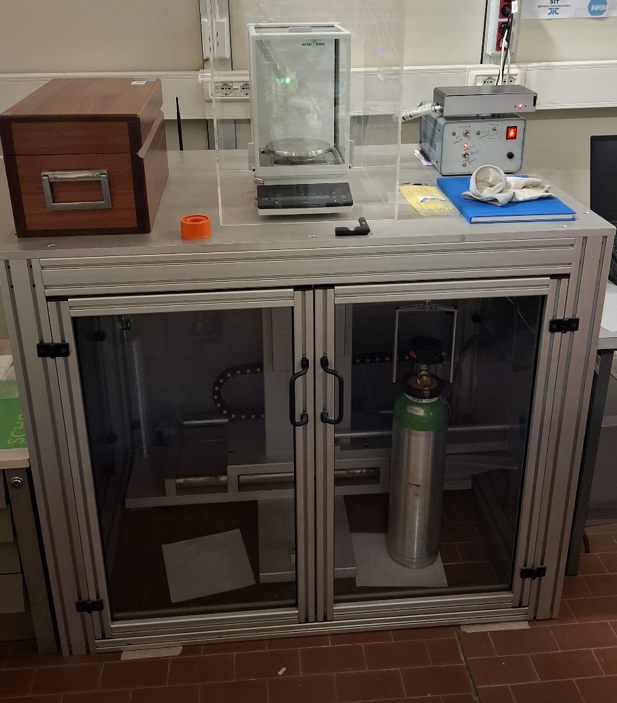
Figure 1: Mass comparator for gravimetric preparation used in INRiM laboratory
In contrast, INRiM applies a method based on the higher stability of NO/N₂ mixtures compared to NO₂/N₂ mixtures. Following an approach successfully used in the CCQM-K74.2018 key comparison, NO₂ is generated directly inside the cylinder through the controlled reaction of NO with O₂: This in situ generation minimizes the handling of a reactive NO₂ and reduces losses caused by interactions with the cylinder walls.
Another notable difference is concerned with cylinder conditioning before filling. At CMI, cylinders are evacuated by a membrane pump followed by a turbomolecular pump. At INRiM, the cylinders are additionally heated to approximately 60 °C during evacuation, which enhances the removal of moisture and residual gases and may contribute to improved long-term stability of the prepared mixtures.
Differences are also found in the gravimetric determination of the added gas masses. At CMI, the amount of gas added is determined from the measured mass difference between a reference cylinder and the cylinder being filled. INRiM, on the other hand, uses calibrated weights mounted on a dedicated holder to compensate the mass difference, which is maintained within 1 g. This gravimetric substitution method reduces the influence of balance drift and environmental effects, potentially leading to lower preparation uncertainties, particularly for low-concentration mixtures.
Key achievements:
The collaboration successfully facilitated the transfer and enhancement of expertise in the preparation and validation of reference gas mixtures used for environmental monitoring. During the programme, the MSA researcher from CMI developed a thorough understanding of gravimetric gas-mixture preparation, including mass calculations, determination of mixture composition, and evaluation of measurement uncertainty.
Overall, the stay in INRiM significantly expanded the researcher’s technical skills and practical experience, improved understanding of advanced gas-metrology methodologies, and strengthened the capability to provide reliable metrological support for the monitoring of nitrogen-based atmospheric pollutants.