

Mentoring Scheme Award
Calibrations of beta-emitting radionuclides using Fidelis
Application code: MSA-25-03-03
Organisation 1: STUK – Radiation and Nuclear Safety Authority, Finland
Organisation 2: NPL – National Physical Laboratory, United Kingdom
Joint measurements and knowledge transfer with experts at NPL
Objective
Accurate activity measurements are essential for the safe and effective use of radionuclides in nuclear medicine. Finland has lacked a national calibration service for radionuclide calibrators, and therefore STUK acquired a Fidelis secondary-standard radionuclide calibrator to establish this capability. A recent EURAMET.RI(II)-S9 comparison confirmed good performance for most radionuclides but revealed unexpected results for yttrium-90 (Y-90), a pure beta-emitter increasingly used in targeted radionuclide therapy.
To address this challenge, Paula Toroi and Reetta Nylund from STUK worked with Andrew Fenwick and his colleagues at NPL through a EURAMET CaBuCo Mentoring Scheme Award. During a three-week placement at NPL, the team investigated the performance of STUK’s Fidelis system for Y-90 and examined the common practice of using strontium-90 (Sr-90) as a surrogate calibration source for beta-emitters. The work also complemented the European Partnership on Metrology project 24RPT01 ETrain by generating beta-emitter-specific evidence beyond the project’s original scope.
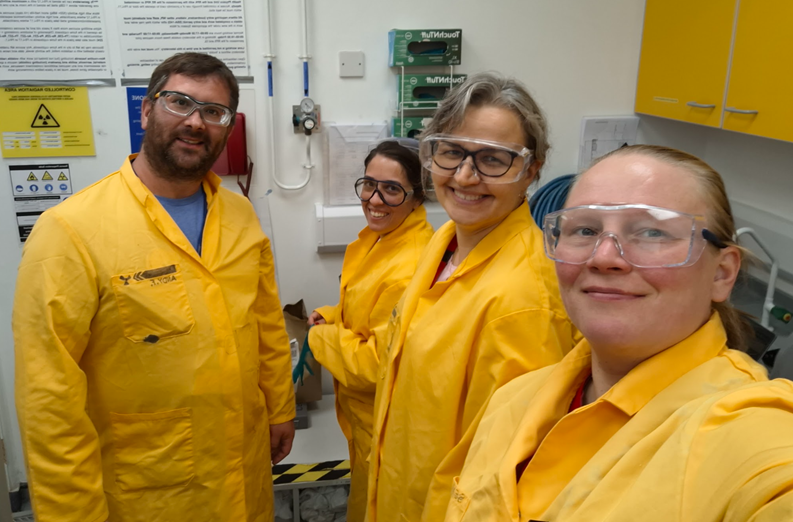
Figure 1. The team preparing radionuclide sources at NPL.
Joint measurements and knowledge transfer
The MSA combined hands-on measurements with mentoring in source preparation, calibration procedures, uncertainty evaluation, customer calibration services, and quality management. STUK’s Fidelis was studied alongside NPL’s reference measurement systems, enabling direct comparison under carefully controlled conditions.
The team measured Y-90, Sr-90, and a broad range of other radionuclides. The team systematically assessed how source geometry, holder design, positioning, rotation, electrometer configuration, and calibration settings affected the results. These investigations helped identify and resolve the causes of the earlier Y-90 discrepancies. In addition, the performance tests covered repeatability, reproducibility, linearity, and background measurements.
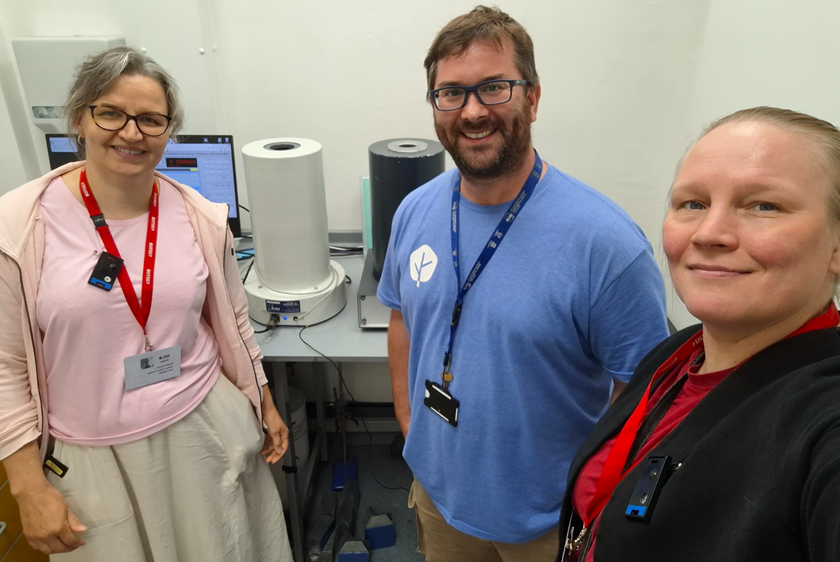
Figure 2. Joint measurements with the STUK Fidelis and NPL reference radionuclide calibrators
Outcomes and impact
The collaboration produced a unique dataset covering multiple radionuclides, geometries and measurement configurations. Although the use of Sr-90 as a surrogate for Y-90 was not ruled out, the results showed that geometry-specific calibration is essential for achieving a standard uncertainty below 3% in Y-90 measurements.
The work increased confidence in STUK’s national reference capability and led to improvements in its quality management system, including enhanced quality-control checks, time synchronisation, background measurements, and electrometer verification. The results will support updated correction factors, improved uncertainty budgets and documented procedures for beta-emitting radionuclides, providing a strong foundation for a traceable national calibration service in Finland.
The impact extends beyond STUK and NPL. The findings will be shared through technical reports, guidance, scientific publications, and the ETrain network, helping Fidelis users and radionuclide metrology laboratories improve the consistency and harmonisation of beta-emitter calibrations across Europe. Initial results have already been presented at national and international events, including the International Symposium on Standards, Applications and Quality Assurance in Medical Radiation Dosimetry (IDOS 2026).